
Termites cause billions in structural damage every year, and they don’t discriminate between new builds and century-old homes. Unlike flood or wind damage, most homeowners’ insurance policies don’t cover termite repair. That makes understanding treatment costs critical, not just for active infestations, but for preventive measures, too. The price varies widely based on treatment type, property size, and how far the infestation has spread. In 2026, homeowners can expect to pay anywhere from a few hundred dollars for spot treatments to several thousand for whole-home liquid barriers or ongoing bait systems. This guide breaks down what’s actually driving those numbers.
Table of Contents
ToggleKey Takeaways
- Termite treatment costs typically range from $1,200 to $3,000+ depending on method, with liquid termiticides averaging $1,200–$2,500 and baiting systems starting at $1,500–$3,000 plus annual monitoring fees.
- Property size, infestation severity, foundation type, termite species, and regional labor costs are the primary drivers of termite treatment pricing.
- Liquid treatments work quickly (within days) and last five to ten years, while baiting systems are less invasive but take three to six months and require ongoing $300–$500 annual maintenance.
- DIY termite treatment kits ($50–$300) rarely justify the savings due to misdiagnosis risks, equipment limitations, licensing violations, and lack of warranty protection that professionals provide.
- Get at least three quotes, address moisture issues before treatment, bundle services for discounts, and schedule during off-peak seasons (late fall/winter) to save 10–15% on costs.
Average Cost of Termite Treatment by Method
The two dominant approaches, liquid termiticides and baiting systems, differ in application, longevity, and upfront investment. Knowing which fits your situation (and budget) is half the battle.
Liquid Termite Treatments
Liquid termiticides create a chemical barrier in the soil around and under your home’s foundation. Professionals drill into concrete slabs or trench around the perimeter, then inject a liquid solution that kills termites on contact or as they pass through treated zones. Common active ingredients include fipronil, imidacloprid, and bifenthrin.
Typical costs range from $1,200 to $2,500 for an average-sized home (around 2,000 square feet), though larger properties or heavily infested structures can push that to $3,500 or more. Factors like basement walls, crawl spaces, and existing landscaping affect labor time and chemical volume. Most treatments last five to ten years with proper application, making them a solid long-term investment if you’re not planning to move soon.
Liquid treatments work fast, usually within days, and are ideal when you need immediate knockdown. They do require drilling through slab foundations or extensive trenching, so expect some short-term disruption to patios, garden beds, or driveways.
Termite Baiting Systems
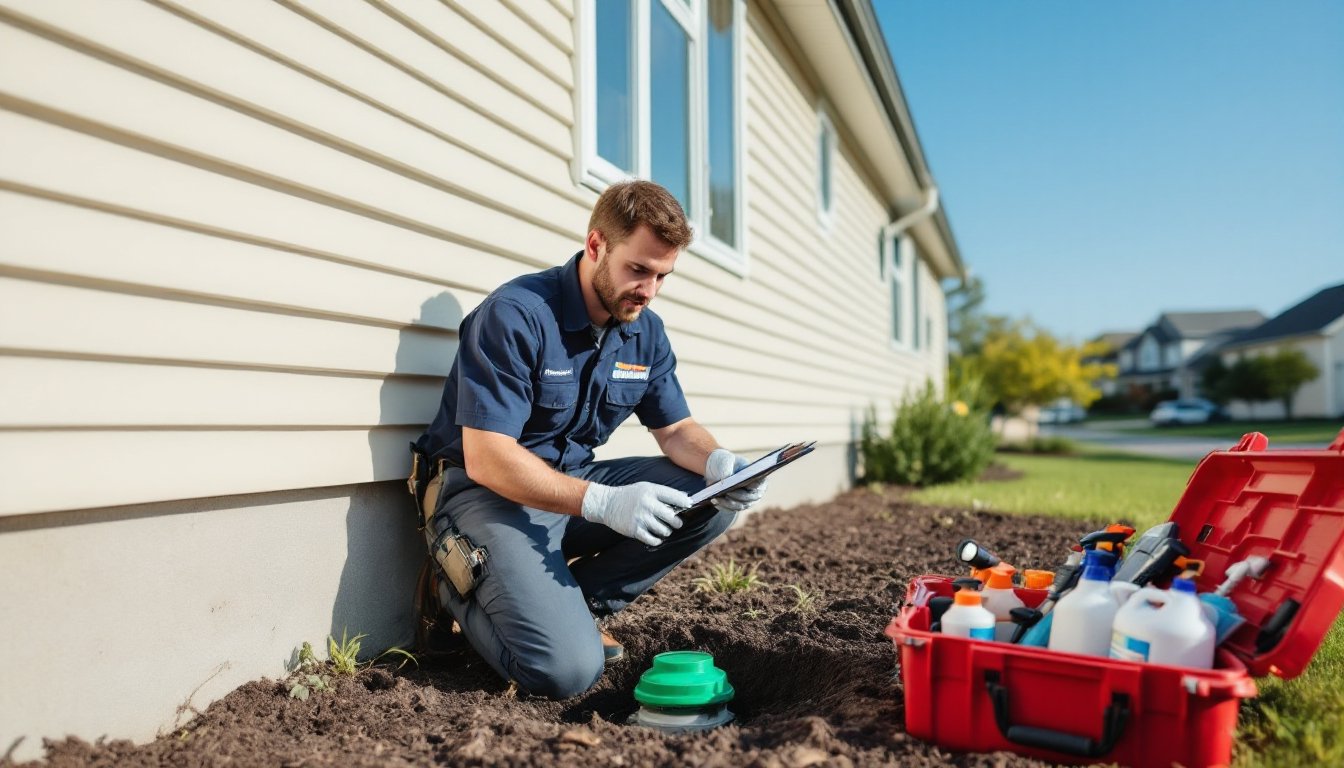
Baiting systems use in-ground stations placed around the property’s perimeter. These stations contain cellulose monitors: once termites are detected, the professional swaps in bait cartridges laced with slow-acting insect growth regulators (IGRs) like hexaflumuron or noviflumuron. Workers carry the bait back to the colony, eventually collapsing it from within.
Upfront installation generally costs $1,500 to $3,000, depending on the number of stations (typically spaced 10 to 20 feet apart). Ongoing monitoring and bait replenishment add $300 to $500 per year. While the annual fees seem steep, bait systems offer continuous protection and are less invasive than trenching, no drilling through your slab.
Baiting takes longer to eliminate a colony, often three to six months, but it’s less disruptive and can be adjusted as conditions change. It’s a smart choice for homes with extensive landscaping, vinyl siding close to grade, or wells that limit chemical use near groundwater.
Factors That Affect Termite Treatment Pricing
Treatment quotes aren’t plucked from thin air. Several variables stack up to determine the final invoice.
Property size and linear footage: Most pest control companies charge by the linear foot of foundation perimeter. A sprawling ranch with 200 linear feet costs more to treat than a compact two-story with 120 feet, even if square footage is similar.
Infestation severity: Light infestations caught early might only need spot treatments or limited bait stations. Widespread damage, hollowed studs, sagging floors, mud tubes across multiple walls, requires more chemical, more labor, and sometimes structural repairs before treatment even starts. National averages show termite control costs typically range from $263 to $1,032, but severe cases exceed that.
Construction type: Slab foundations require drilling and high-pressure injection. Homes with crawl spaces or basements need perimeter trenching and interior soil treatment. Pier-and-beam construction allows easier access but may involve treating wooden supports directly.
Termite species: Subterranean termites (the most common) live in soil and require soil treatments or baiting. Drywood termites nest inside wood and often call for fumigation or localized wood injections, which run $1,200 to $2,500 for spot treatments or $2,000 to $8,000+ for whole-structure tenting.
Regional labor and material costs: Urban markets and high-cost-of-living areas carry higher service fees. Accessibility matters, too, steep slopes, dense plantings, or narrow side yards slow crews down and inflate labor charges.
Permits and code requirements: Some jurisdictions require licensed applicators to pull permits for chemical applications near wells or waterways. Factor in $50 to $150 if applicable.
DIY vs. Professional Termite Treatment: Cost Comparison
Big-box stores sell DIY termite treatment kits, liquid concentrates, foam applicators, and bait stakes, for $50 to $300. On paper, that’s a fraction of a pro’s quote. In practice, the savings evaporate if you misdiagnose the species, under-treat critical zones, or violate local pesticide regulations.
DIY liquid treatments require a pump sprayer, trenching tools, and the ability to calculate dilution rates and gallons per linear foot. A 20-gallon jug of generic termiticide concentrate runs around $80 to $150, enough to treat 100 to 150 linear feet when mixed correctly. But without professional-grade equipment, you won’t achieve the four-gallon-per-ten-linear-feet application rate most products specify for adequate soil saturation. Undertreating leaves gaps termites can bypass.
DIY bait stations (around $100 for a 10-pack) need regular inspection, monthly at first, quarterly once colonies decline. Most homeowners forget to check them, negating the entire system. Professionals bring experience spotting early activity and adjusting bait placement based on termite behavior.
Licensing and liability matter. In many states, applying restricted-use termiticides without a pest control operator license is illegal. If you cause environmental contamination or a neighbor’s pet gets sick, you’re on the hook. Pros carry general liability insurance and warranty their work, typically one to five years, sometimes longer.
For localized drywood infestations in a single board or window frame, a foam termiticide applied via injection holes can be effective and costs under $50. Anything beyond that, subterranean colonies, structural damage, or whole-house prevention, justifies hiring a licensed company. The guidance from established platforms consistently emphasizes professional intervention for active infestations.
How to Save Money on Termite Treatment
Termite treatment isn’t cheap, but a few strategies can trim hundreds off the bill without sacrificing effectiveness.
Get multiple quotes: Prices vary by 20% to 40% between companies for identical services. Aim for at least three estimates, and ask each to itemize labor, materials, and warranty terms. Beware of lowball bids that skip prep work or use off-brand chemicals with short residual life.
Bundle with annual pest control: Some companies discount termite treatments when you sign up for quarterly general pest service. The savings, often $100 to $300, can offset the cost of year-round spider and ant coverage.
Address moisture issues first: Termites need water. Fix leaking gutters, grade soil away from the foundation, and repair plumbing drips. Drier conditions make your home less attractive and can reduce the treatment scope. Proper site prep also ensures better chemical adhesion and longevity.
Negotiate warranties: A longer warranty (five to ten years versus one or two) adds peace of mind and can improve resale value. Some companies waive the warranty fee if you commit to annual inspections, which cost $75 to $150 but catch new activity early.
Time it right: Pest control companies run promotions during slower seasons, late fall and winter in most regions. You might snag a 10% to 15% discount by scheduling off-peak.
Confirm what’s covered: “Retreatment at no charge” sounds great until you read the fine print requiring annual inspection fees. Ask whether follow-up visits, bait refills, and damage repairs are included or billed separately. Tools like project cost calculators can help benchmark local pricing before you commit.
Conclusion
Termite treatment is one of those expenses no homeowner wants but can’t afford to skip. Whether you opt for a fast-acting liquid barrier or the long-game bait approach, understanding the cost drivers, property size, infestation severity, construction type, helps you budget realistically and avoid overpaying. DIY can work for minor, localized issues, but active infestations and preventive whole-house systems are best left to licensed pros who warranty their work and carry the right insurance. Get multiple quotes, ask about bundled services, and don’t skip moisture control. The upfront investment beats the alternative: structural damage, costly repairs, and sleepless nights wondering if the colony’s still chewing.