
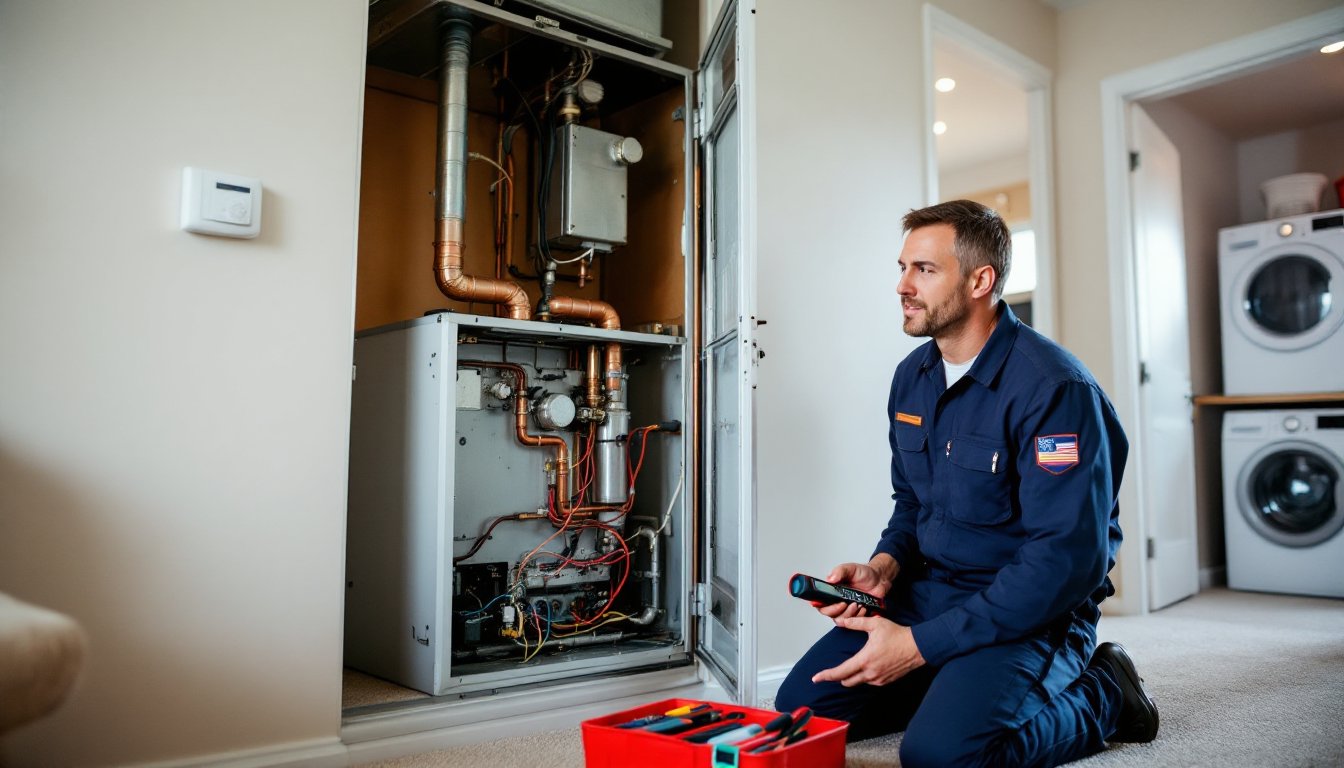
When the furnace quits on a January night or the AC dies mid-July, most homeowners face two immediate questions: What’s wrong, and how much will it cost? HVAC repair pricing can feel like a black box, service call fees, labor rates, and parts costs vary widely depending on the issue, the system age, and even where you live. Understanding typical repair costs helps homeowners distinguish between a routine fix and a sign that replacement might be the smarter financial move. This guide breaks down average HVAC repair costs by issue type, the factors that drive pricing, and practical ways to manage these expenses without getting caught off guard.
Table of Contents
ToggleKey Takeaways
- Average HVAC repair costs range from $100 to over $3,000, with most homeowners paying around $350, depending on the issue, system age, and location.
- Major repairs like compressor replacement ($1,200–$2,500) or heat exchanger replacement ($1,000–$2,000) often make system replacement a smarter financial choice, especially for units over 10–12 years old.
- Regular preventive maintenance—including biannual tune-ups ($80–$150 each) and monthly filter changes—can reduce HVAC repair costs by catching small issues before they become expensive failures.
- Set aside $300–$500 annually for maintenance and minor repairs, and always get multiple quotes for repairs over $500, as prices can vary by 30% or more between contractors.
- DIY tasks like air filter replacement, drain line cleaning, and thermostat swaps are safe, but refrigerant work, electrical repairs, and furnace modifications require EPA-certified or licensed technicians to avoid voiding warranties and risking safety hazards.
Average HVAC Repair Costs by Issue Type
HVAC repairs span a wide range, from quick fixes to major component replacements. Nationally, homeowners pay an average of $350 for most HVAC repairs, though costs can swing from $100 to over $3,000 depending on the problem. Minor issues like replacing a thermostat or cleaning a condensate drain line typically land on the lower end, while compressor or heat exchanger replacements push into four-figure territory.
Common Repairs and Their Price Ranges
Thermostat replacement: $100–$300. A faulty thermostat is one of the cheapest fixes, labor is minimal, and most programmable or smart thermostats cost under $150.
Capacitor replacement: $120–$250. Capacitors help motors start and run: they’re small, inexpensive parts, but labor and the service call fee add up.
Blower motor repair or replacement: $300–$600. If the motor itself fails, expect closer to $600. Cleaning or fixing a motor issue might cost half that.
Refrigerant leak repair and recharge: $200–$1,500. The repair cost depends on leak location (evaporator coil leaks are expensive to access), and refrigerant type matters, R-22 (Freon) is being phased out and costs significantly more than R-410A.
Contactor or relay replacement: $100–$400. These electrical switches control the compressor and fan: they’re cheap parts but require safe handling of high-voltage components.
Condensate pump replacement: $100–$400. If the pump clogs or fails, water backs up and the system shuts down. Replacement is straightforward.
Compressor replacement: $1,200–$2,500. The compressor is the heart of the cooling system. At this price point, many homeowners weigh replacement against a new outdoor unit.
Heat exchanger replacement: $1,000–$2,000. A cracked heat exchanger in a gas furnace is a safety hazard (carbon monoxide risk). Replacement labor is intensive, and many opt for a new furnace instead.
These figures assume standard residential systems and mid-range labor rates. Older systems, hard-to-reach installs, or high-efficiency equipment can push costs higher.
Factors That Influence HVAC Repair Pricing
Several variables affect the final invoice, and understanding them helps homeowners avoid sticker shock.
Service call fee: Most HVAC companies charge a flat diagnostic fee of $75–$200 just to show up and diagnose the problem. Some waive this if you proceed with the repair.
Labor rates: HVAC technicians typically charge $75–$150 per hour, depending on region and company. Emergency or after-hours calls can double that rate.
System type and age: Heat pumps, dual-fuel systems, and high-efficiency variable-speed units require specialized knowledge and parts. Older systems (10+ years) may need obsolete parts that cost more or take longer to source.
Accessibility: A rooftop unit or a furnace wedged into a crawlspace takes longer to service than a garage install, adding labor time.
Refrigerant type: R-22 (Freon) production ended in 2020. Systems still using it face steep refrigerant costs, sometimes $100+ per pound, while R-410A systems pay a fraction of that.
Warranty status: If the system or component is still under warranty, parts may be covered. Labor almost never is, so expect to pay for the technician’s time even with a free part.
Regional cost of living: HVAC repairs in major metro areas generally run 20–40% higher than in rural or lower-cost regions.
Knowing these factors upfront helps homeowners ask the right questions when getting quotes.
DIY vs. Professional HVAC Repairs: When to Call an Expert
Some HVAC tasks are DIY-friendly: others require an EPA-certified technician and specialized tools.
Safe DIY tasks:
- Replacing the air filter: Do this every 1–3 months. It’s the single most important maintenance task and costs $10–$30.
- Cleaning the condensate drain line: A clogged drain can shut down the system. Flush it with a wet/dry vacuum or a vinegar/water mix.
- Straightening condenser fins: Use a fin comb (about $10) to straighten bent aluminum fins on the outdoor unit, improving airflow.
- Thermostat replacement: If you’re comfortable with basic wiring (turn off power first), swapping a thermostat is straightforward. Most come with clear instructions.
- Clearing debris around the outdoor unit: Keep a 2-foot clearance around the condenser. Trim back shrubs, remove leaves, and hose off the coil gently.
When to call a pro:
- Refrigerant work: Handling refrigerant requires EPA Section 608 certification. DIY recharging is illegal and dangerous.
- Electrical repairs: High-voltage components (compressor, blower motor, capacitors) pose shock and fire risks. Leave these to licensed techs.
- Gas furnace repairs: Any work involving gas lines, burners, or the heat exchanger should be done by a professional. Carbon monoxide leaks are life-threatening.
- Compressor or heat exchanger replacement: These are major, system-critical repairs requiring specialized tools and knowledge.
- Ductwork modifications or sealing: Poorly done ductwork costs you in energy bills and comfort. A pro ensures proper sizing and sealing.
Permits and codes: Structural ductwork changes, new HVAC installations, and gas line work typically require permits and inspections. Check local codes, many jurisdictions require licensed contractors for anything beyond basic maintenance.
If you’re unsure, err on the side of calling a technician. A botched DIY repair can void warranties and create bigger, costlier problems.
How to Budget for HVAC Repairs and Avoid Surprise Expenses
HVAC systems don’t fail on a schedule, but smart budgeting and planning can soften the financial hit.
Set aside an annual maintenance fund: A reasonable target is $300–$500 per year for routine maintenance and minor repairs. This covers two annual tune-ups (spring and fall, about $80–$150 each) and leaves a cushion for small fixes.
Get multiple quotes for major repairs: For anything over $500, call at least two or three HVAC companies. Prices can vary by 30% or more for the same repair. Make sure quotes itemize parts, labor, and any fees.
Ask about financing or payment plans: Many HVAC companies offer 0% financing for 6–12 months on repairs over a certain threshold. If a $1,500 compressor replacement strains your budget, spreading payments can help.
Check your home warranty: If you have a home warranty policy, HVAC repairs may be covered for a service call fee (typically $75–$125). Read the fine print, some policies exclude pre-existing conditions or certain component types.
Know when to repair vs. replace: A common rule of thumb: if the repair cost exceeds 50% of a new system’s cost and the unit is over 10–12 years old, replacement is usually smarter. A $2,000 compressor fix on a 15-year-old AC is throwing good money after bad.
Emergency fund for HVAC: Major repairs or replacements can hit $5,000–$10,000 for a full system. If your unit is aging (8+ years), start building a dedicated replacement fund so you’re not forced into a high-interest loan when it finally dies.
Ways to Reduce HVAC Repair Costs Long-Term
Preventive maintenance and smart habits can extend system life and minimize repair frequency.
Schedule biannual professional tune-ups: Spring (AC) and fall (furnace) inspections catch small issues before they become expensive failures. Expect to pay $80–$150 per visit. Many companies offer maintenance plans that bundle two visits plus discounts on repairs.
Change filters religiously: A $15 filter changed every 1–3 months prevents blower motor strain, coil freezing, and poor airflow, three common (and pricey) repair triggers.
Keep the outdoor unit clean: Rinse the condenser coils annually. Dirty coils force the compressor to work harder, shortening its lifespan.
Upgrade to a programmable or smart thermostat: Reducing runtime when you’re away cuts wear on components. Many smart thermostats also alert you to filter changes or unusual runtime patterns.
Seal and insulate ductwork: Leaky ducts waste 20–30% of conditioned air, making the system work harder. Sealing major leaks with mastic sealant (not duct tape) and insulating ducts in unconditioned spaces pays off in lower bills and less strain.
Address minor issues quickly: A noisy blower or a thermostat that doesn’t hold settings might seem minor, but ignoring them can lead to bigger failures. Early intervention is almost always cheaper.
Consider a maintenance contract: Many HVAC service companies offer annual contracts ($150–$300) that include two tune-ups, priority scheduling, and discounts on parts and labor. For aging systems, this can pay for itself with a single repair.
Improve home insulation and sealing: The less your HVAC system has to run, the longer it lasts. Air sealing, attic insulation, and window upgrades reduce load and cut repair frequency over time.
Conclusion
HVAC repairs are an inevitable part of homeownership, but they don’t have to be financial ambushes. By understanding typical costs, knowing what you can handle yourself, and investing in preventive maintenance, homeowners can keep systems running efficiently and budget realistically. When major repairs loom, weigh the cost against the system’s age and expected remaining lifespan, sometimes the smartest repair is a replacement.