
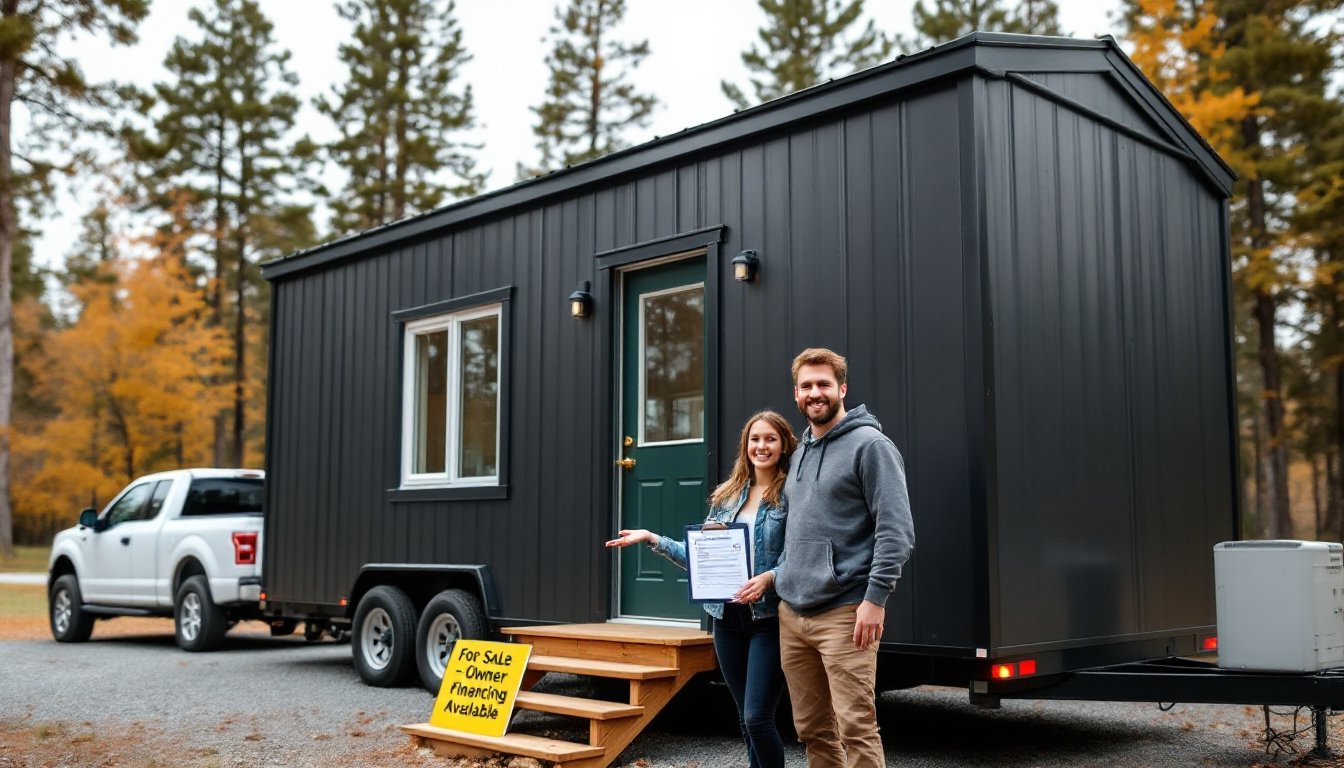
The idea of buying a tiny house for $100 down sounds too good to be true, but it’s a legitimate entry point for aspiring homeowners priced out of traditional housing. With median home prices still hovering well into six figures and down payments often requiring tens of thousands in savings, ultra-low down payment options are reshaping how people think about homeownership. Tiny houses, typically between 100 and 400 square feet, offer a path to ownership that sidesteps conventional mortgage requirements, but understanding the mechanics, qualifications, and true costs is essential before signing anything.
Table of Contents
ToggleKey Takeaways
- Buying a tiny house for $100 down leverages seller-financed arrangements that bypass traditional mortgage requirements, making homeownership accessible to buyers priced out of conventional markets.
- Ultra-low down payments come with trade-offs: expect higher interest rates (8–12% vs. 6–7% for traditional mortgages), shorter loan terms, and faster repossession clauses if you default.
- Qualify for minimal down payment tiny house loans by maintaining a debt-to-income ratio below 43%, documenting steady income, and meeting lower credit score thresholds (often 580–620) than conventional mortgages require.
- True ownership costs extend far beyond the $100 deposit, including monthly payments ($300–$800), land leasing or purchase ($200–$600/month or $5,000–$50,000+), utilities, insurance ($300–$1,200/year), and potential transportation fees ($1–$5 per mile).
- Secure a tiny house by researching reputable builders, inspecting the unit in person, obtaining all financing terms in writing, confirming zoning compliance before closing, and consulting a real estate attorney to protect your investment.
What Does ‘$100 Down’ Really Mean for Tiny House Buyers?
A $100 down payment isn’t a standard mortgage product. It’s a seller- or manufacturer-driven financing arrangement designed to lower the barrier to entry. In most cases, buyers aren’t securing a traditional home loan backed by Freddie Mac or Fannie Mae. Instead, they’re entering into a private financing agreement where the seller holds the note.
This means the buyer makes monthly payments directly to the seller or manufacturer, not a bank. The $100 acts as a good-faith deposit or initial payment that locks in the purchase agreement. The remaining balance, often $20,000 to $80,000 depending on the unit, is amortized over a term ranging from 5 to 15 years.
Critically, this isn’t free money. The low down payment is offset by higher interest rates (often 8% to 12%, compared to conventional mortgages around 6% to 7%), shorter loan terms, and stricter default clauses. If a buyer misses payments, the seller can repossess the tiny house much faster than a traditional foreclosure process.
Buyers also need to understand whether they’re purchasing the structure alone or the structure plus land. Many $100-down deals cover only the tiny house shell, leaving the buyer responsible for finding and securing a place to park it, which involves zoning compliance, utility hookups, and potentially land lease fees.
Finding Tiny Houses with Ultra-Low Down Payment Options
Owner Financing and Rent-to-Own Arrangements
Owner financing is the most common route to a $100 down tiny house. The seller acts as the lender, structuring a payment plan that bypasses traditional mortgage underwriting. This is especially common in the tiny house market, where many units don’t meet the IRC’s minimum dwelling size requirements (typically 120+ square feet with minimum ceiling heights) and so don’t qualify for conventional loans.
Buyers should request a written promissory note and security agreement that outline the loan term, interest rate, payment schedule, and what happens in case of default. Some sellers offer balloon payments, where the buyer makes smaller monthly payments for a few years, then owes a large lump sum at the end. Avoid these unless you have a clear plan to refinance or pay off the balance.
Rent-to-own arrangements function differently. The buyer rents the tiny house for a set period (often 2 to 5 years), with a portion of each monthly payment credited toward the purchase price. At the end of the term, the buyer can exercise the option to buy, applying the accumulated credits as the down payment. This model offers flexibility but often includes non-refundable option fees and higher monthly payments than straight rentals.
Some listings, like one profiled by Curbed, demonstrate how minimal down payments work in practice. These deals require scrutiny: verify the seller’s ownership, check for liens, and confirm the unit’s build quality before committing.
Manufacturer Payment Plans and In-House Financing
Several tiny house manufacturers offer in-house financing with down payments as low as $100 to $500. Companies like Tumbleweed, Tiny Heirloom, and others have structured payment plans aimed at buyers who lack access to traditional credit.
These plans typically require:
- Proof of income (pay stubs, tax returns, or bank statements)
- A minimum credit score (often 580 to 620, lower than conventional mortgages)
- Verification of employment or steady income source
Interest rates on manufacturer financing range from 7% to 14%, and terms are usually 7 to 15 years. Some builders offer promotional zero-interest periods for the first 6 to 12 months, but buyers need to read the fine print, deferred interest can balloon the total cost if the balance isn’t paid down aggressively.
Manufacturer financing often includes the option to customize the build, but upgrades (premium appliances, solar panels, composting toilets) aren’t always covered under the low-down-payment plan. Buyers may need to pay those costs upfront or negotiate a higher monthly payment.
Qualifying for Minimal Down Payment Tiny House Loans
Qualifying for a $100-down tiny house deal is less stringent than a conventional mortgage, but it’s not automatic. Sellers and manufacturers evaluate risk differently than banks, focusing on income stability over credit perfection.
Most private lenders require:
- Debt-to-income ratio below 43% (monthly debt payments divided by gross monthly income)
- Documented income for at least 12 months
- No recent bankruptcies or foreclosures (though some sellers are flexible on older credit events)
Some sellers accept alternative income documentation, such as 1099 forms for freelancers, Social Security statements, or disability benefits. This makes tiny house financing accessible to self-employed buyers and retirees who might struggle with traditional underwriting.
Buyers should also prepare for a property inspection or appraisal. Tiny houses built on trailers are classified as personal property (like an RV), not real estate, which affects financing and insurance. If the unit is built on a permanent foundation, it may qualify as real property, opening the door to conventional mortgage products, though few lenders offer these for sub-400-square-foot dwellings.
Finally, buyers need to verify that the tiny house meets local zoning and building codes. Some jurisdictions classify tiny houses as accessory dwelling units (ADUs), which require permits and inspections. Others prohibit them outright in residential zones. Confirm legality before financing anything.
Understanding the True Costs Beyond the Down Payment
A $100 down payment is just the start. The total cost of tiny house ownership includes:
- Monthly loan payments: Expect $300 to $800/month depending on purchase price and interest rate.
- Land costs: Leasing a pad in a tiny house community runs $200 to $600/month. Buying land outright varies wildly by region, $5,000 to $50,000+ for a small lot.
- Utilities: Off-grid setups (solar, composting toilet, rainwater collection) cost $3,000 to $15,000 upfront. Grid connections require permits and hookup fees ($500 to $3,000).
- Insurance: Tiny house insurance (often structured as RV or specialty dwelling coverage) costs $300 to $1,200/year.
- Maintenance and repairs: Budget 1% to 3% of the home’s value annually. Roof sealant, tire maintenance (for trailer-mounted units), and HVAC upkeep add up.
Many buyers underestimate transportation costs if the tiny house is built off-site. Hauling a 20- to 30-foot unit can cost $1 to $5 per mile, plus pilot car fees and permits for wide loads.
Property taxes depend on classification. Tiny houses on permanent foundations are taxed like traditional homes. Those on trailers may be exempt from property tax but subject to personal property tax or vehicle registration fees.
Buyers should also factor in financing costs over time. A $40,000 tiny house financed at 10% over 10 years costs roughly $63,000 total, an extra $23,000 in interest. Resources like Fine Homebuilding offer guidance on long-term cost planning for alternative housing structures.
Steps to Secure Your Tiny House with $100 Down
Ready to move forward? Follow these steps:
-
Research sellers and manufacturers. Look for established builders with verifiable reviews. Check the Better Business Bureau and tiny house forums for complaints or red flags.
-
Visit the unit in person. Inspect the build quality: roof integrity, window seals, electrical wiring (must meet NEC standards if grid-connected), plumbing connections, and trailer condition (if applicable). Bring a contractor or experienced DIYer if you’re unsure what to look for.
-
Request full financing terms in writing. Don’t rely on verbal promises. Get the interest rate, payment schedule, late fees, default terms, and any prepayment penalties documented.
-
Secure land or parking before closing. Confirm zoning allows tiny houses. Obtain any necessary permits. If leasing, get a written lease agreement that allows long-term placement.
-
Arrange insurance. Contact insurers who specialize in tiny houses or RVs. Standard homeowners policies won’t cover them.
-
Close the deal. Review all documents with a real estate attorney if possible. Some states require notarized bills of sale for structures on trailers. Transfer of title should be clear and recorded.
-
Plan for delivery and setup. If the tiny house is transported, hire a licensed hauler with insurance. Budget for site prep: leveling, anchoring, utility connections, and skirting.
DIYers with construction experience can handle some setup tasks, running water lines, installing electrical panels, and building decks or porches. But structural anchoring (especially in high-wind or seismic zones) often requires engineered tie-downs and should follow IRC Appendix Q guidelines for tiny houses or RV standards.
For design inspiration and examples of professionally built tiny homes, platforms like Dwell showcase innovative layouts and material choices that maximize small footprints. Studying these builds helps buyers identify quality craftsmanship and functional design.
Finally, be honest about your skill level and timeline. Securing a tiny house with $100 down is achievable, but rushing the process or skipping due diligence can lead to financial loss or a home that doesn’t meet your needs. Take the time to verify everything, plan for hidden costs, and ensure the unit is legal to occupy in your chosen location.