
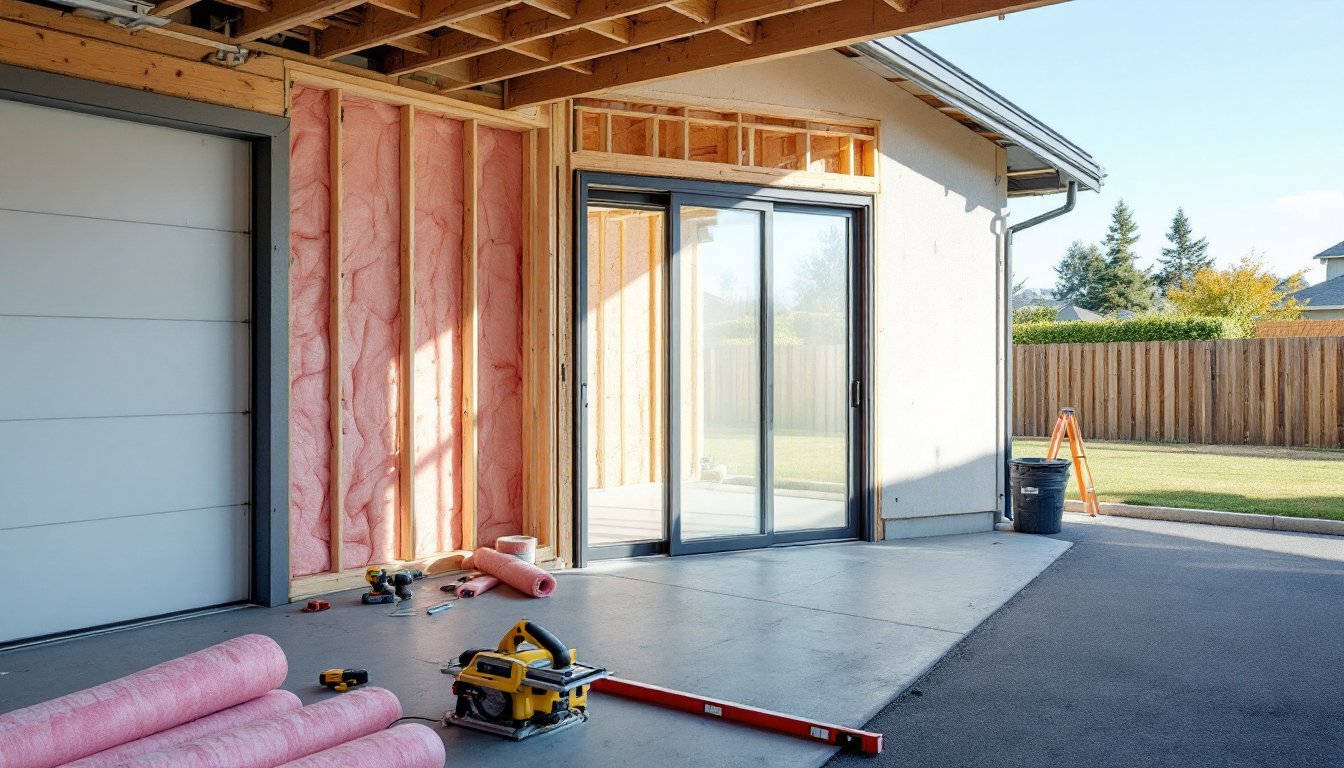
Converting a garage door opening doesn’t mean walling it up and losing light. Plenty of homeowners want to repurpose garage space, turning it into a home office, studio, or flex room, but slamming up drywall kills the openness that made the garage useful in the first place. The smarter play? Replace that roll-up door with glass, bifolds, or a hybrid setup that brings in daylight, controls climate, and still lets the space breathe. Whether the goal is resale appeal, better insulation, or a workshop that doesn’t feel like a cave, there’s a door solution that fits the budget and skill level.
Table of Contents
ToggleKey Takeaways
- Garage door conversions improve energy efficiency by 20–30% in attached garages while adding usable square footage without requiring a full home addition.
- Sliding glass doors and French doors are the most popular conversion ideas, offering natural light, climate control, and resale appeal compared to traditional permanent walls.
- Bifold door systems provide seamless indoor-outdoor flow for home gyms and studios but require professional installation, certified expertise, and often structural upgrades that cost $5,000–$8,000.
- Budget-friendly conversion options include vinyl patio doors ($400–$800), insulated curtain walls ($600–$1,200), and DIY stud framing with salvaged windows under $300.
- Always check local building codes and obtain permits before converting garage door openings, as structural changes, electrical work, and fire-rating alterations typically require professional review.
- Safety is critical: torsion spring removal should only be done by professionals due to injury risk, and glass panel installation requires two people since panels weigh 80–150 pounds each.
Why Consider Converting Your Garage Door Opening?
Garages weren’t designed for human comfort. Single-pane metal doors, zero insulation, and air gaps the size of pool noodles make them miserable in winter and sweltering in summer. Converting the door opening solves that problem while adding usable square footage without a full addition.
A properly insulated door conversion can drop heating and cooling costs by 20–30% in attached garages, according to home improvement guides. It also opens up design flexibility. A home gym, art studio, or guest suite needs natural light and climate control, two things a standard garage door can’t deliver.
There’s also the resale angle. Finished garage conversions that retain flexible access (via glass or folding doors) appeal to a wider buyer pool than a permanent wall-off. Just be aware: most jurisdictions require a permit if you’re altering the structure, adding electrical, or changing the garage’s fire rating. Check local codes before ordering materials.
Finally, it’s worth mentioning safety. If the existing garage door uses a torsion spring system, removal isn’t a DIY job, those springs store enough tension to cause serious injury. Extension springs are easier, but even then, homeowners unfamiliar with garage door spring systems should hire a pro for disconnection and removal.
Sliding Glass Door Conversion for Maximum Natural Light
Sliding glass doors are the workhorse choice for garage conversions. They’re widely available, competitively priced, and easier to install than bifold or French door systems. Most standard single-car garage openings (8–9 feet wide) can accommodate a three-panel slider: double-car openings (16 feet) fit a four- or six-panel configuration.
What to know before buying:
• Frame material matters. Vinyl is budget-friendly and low-maintenance but can warp in extreme heat. Aluminum holds up better structurally but conducts cold unless it has a thermal break. Fiberglass costs more but handles temperature swings without expanding or sagging.
• Insulation ratings. Look for doors with a U-factor below 0.30 and an Energy Star certification. Double-pane low-E glass with argon fill is the baseline for climate control.
• Track systems. Lift-and-slide mechanisms glide smoother and seal tighter than traditional slide tracks but add $500–$1,000 to the installed cost.
Installation overview:
- Remove the existing garage door and track hardware. Disconnect the opener and cap any electrical in a junction box.
- Frame the opening to match the rough opening specs for the door (check manufacturer’s cut sheet). Most garages have a 2×6 or 2×4 header: you may need to sister additional framing if the span exceeds code limits for your door’s weight.
- Install a sill pan and flashing per manufacturer instructions, this is where most water intrusion happens.
- Set the door, shim level, and secure with structural screws (not drywall screws). Check square at every step.
- Insulate around the frame with low-expansion foam, then trim interior and exterior.
Tools needed: Circular saw or miter saw, drill, level (4-foot minimum), pry bar, caulk gun, reciprocating saw for cutting old framing.
Safety note: Wear safety glasses and work gloves when cutting metal track and handling glass panels. Have a second person on hand, glass door panels weigh 80–150 pounds each.
French Door Installation: Classic Elegance Meets Functionality
French doors bring more architectural character than sliders but require careful planning around swing radius and floor clearance. They’re a strong choice for conversions that prioritize style or need egress compliance for bedroom conversions (most codes require a 32-inch clear opening).
Inswing vs. outswing:
• Inswing doors eat up interior floor space but are easier to weatherproof and more secure (hinges face inside).
• Outswing doors preserve interior space and work better on sloped driveways, but they need a landing or patio outside and robust exterior hinges.
Sizing and configuration:
Standard French door sets come in 5-foot, 6-foot, and 8-foot widths (both panels combined). For a single-car garage (8–9 feet wide), a 6-foot door pair leaves room for framing and insulation. Double-car garages can fit two sets side-by-side or a single 8-foot unit.
Installation steps:
- Frame the opening with a structural header sized to span the width, this usually means a doubled 2×10 or engineered lumber like an LVL beam. Consult local span tables or an engineer if unsure.
- Install king studs, jack studs, and a sill plate. Use pressure-treated lumber for the sill if it’s in contact with concrete.
- Set the door unit (most come pre-hung), shim plumb and level, then secure through the jamb into framing.
- Flash the exterior threshold and head, then apply exterior trim and caulk all seams.
- Add interior trim and paint or stain to match the room.
Cost range: Expect $1,200–$3,500 for a quality fiberglass or steel French door set, plus $500–$1,000 for installation materials (framing, insulation, trim).
Pro tip: If the garage floor is lower than the interior floor, you’ll need to build up a threshold or ramp. This is common in attached garages and often overlooked until the door won’t close.
Folding or Bifold Door Systems for Seamless Indoor-Outdoor Flow
Folding door systems (also called bifold, accordion, or multi-slide doors) stack panels to one or both sides, opening the entire width of the garage. They’re popular for home gyms, studios, and entertaining spaces where you want to blur the line between inside and out.
How they work:
Panels hang from a top track and fold on hinges. When open, they stack to the side: when closed, they form a continuous glass wall. Systems range from three panels (6 feet wide) to ten or more (20+ feet).
Material and hardware considerations:
• Aluminum frames are standard: powder-coated finishes resist corrosion better than anodized.
• Stainless steel rollers and ball-bearing hinges reduce binding and wear.
• Bottom guides keep panels aligned but can collect debris, sweep the track regularly.
Installation complexity:
This is a step up in difficulty from sliders or French doors. The top track must be perfectly level and securely fastened to a structural header. Most manufacturers require installation by certified pros to maintain warranty coverage.
Realistic costs:
Bifold systems run $200–$400 per linear foot installed. A 16-foot opening can hit $5,000–$8,000 for mid-grade materials and professional install. DIY kits exist but rarely include all necessary flashing, weatherstripping, and structural hardware.
Who should attempt this:
Experienced DIYers with framing and precision carpentry skills. First-timers should hire out or start with a smaller project. Misaligned tracks cause binding, air leaks, and premature hardware failure.
Permit requirements:
Almost always required. Bifold systems often exceed the weight and span limits of existing garage headers, necessitating structural upgrades and engineered calculations.
Traditional Wall Framing with Windows and Entry Door
If the goal is a permanent room with no large opening, framing a traditional wall with windows and a standard entry door is the most cost-effective route. It’s also the easiest to insulate and finish to match the home’s interior.
Framing basics:
- Snap a chalk line for the bottom plate. Use pressure-treated lumber if it’s in contact with the concrete slab.
- Cut studs to height (92-5/8 inches for 8-foot ceilings after accounting for plates). Space them 16 inches on-center for drywall support.
- Frame rough openings for windows and the entry door per manufacturer specs. Add cripple studs above and below openings, and use doubled jack studs to carry header loads.
- Install the header, doubled 2×6, 2×8, or LVL depending on span and load. Check local span tables.
Window selection:
Casement or double-hung windows in the 24×36-inch to 36×48-inch range bring in light without dominating the wall. Egress windows (minimum 5.7 square feet of opening, 24-inch minimum height and width) are required if the room will be used as a bedroom.
Insulation and drywall:
Fill stud bays with R-13 or R-15 fiberglass batts (or spray foam for better air sealing). Hang 1/2-inch drywall, tape, mud, and finish. Don’t skip vapor barrier if the garage is attached, moisture from the slab can wick into the wall.
Electrical and HVAC:
Most garage conversions need added outlets, lighting, and climate control. Electrical work requires a permit in most areas. If extending HVAC, consult an HVAC contractor, adding square footage can overload an undersized furnace or AC unit.
Cost estimate:
Materials for framing, one entry door, two windows, insulation, and drywall typically run $1,200–$2,000 for a single-car garage opening. Labor adds another $1,500–$3,000 if hiring out.
Tools needed: Circular saw, drill, framing nailer (or hammer), level, tape measure, drywall saw, utility knife.
Budget-Friendly DIY Options for Garage Door Conversions
Not every conversion needs $5,000 in glass doors. Here are a few lower-cost approaches for homeowners on a tight budget or testing out a garage workspace before committing to a full remodel.
Vinyl sliding patio doors (used or builder-grade):
Home improvement stores carry basic vinyl sliders for $400–$800. They won’t have the same insulation or longevity as premium models, but they’ll handle light use and are simple to install. Check Craigslist or Habitat ReStores for gently used units.
Roll-up insulated curtain wall:
Industrial curtain walls (heavy vinyl with a roll-up mechanism) cost $600–$1,200 installed and provide weather protection without permanent framing. They’re common in workshops and home improvement setups where ventilation and flexibility matter more than aesthetics.
DIY stud wall with salvaged windows:
Framing a wall costs under $300 in lumber if you’re doing the work yourself. Scavenge old windows from demolition sites, salvage yards, or friends remodeling. Mix-and-match sizes add character. Just check sashes for rot and re-glaze any cracked panes before install.
Removable panel system:
Build a series of 2×4 frames clad in plywood, rigid foam, or corrugated polycarbonate. Hinge or bolt them in place so they can be removed seasonally. Total cost: $200–$400. It won’t pass code for a permanent living space, but it works for hobby rooms or temp climate control.
What you’ll sacrifice:
• Lower insulation values (higher heating/cooling costs).
• Less curb appeal and resale value.
• Possible code violations if the space is used as a bedroom or rental unit.
When it makes sense:
You’re renting, planning to move soon, or need a temporary solution while saving for a full remodel.
Conclusion
Garage door conversions range from weekend DIY projects to permit-required structural work. The right approach depends on budget, skill level, and how the space will be used. Sliders and French doors balance cost and function for most homeowners, while bifold systems shine when indoor-outdoor flow is the priority. For tight budgets, a framed wall with windows delivers solid insulation and finish quality at half the cost of glass door systems. Whichever route fits, take time to plan framing, insulation, and weatherproofing, rushing those steps leads to leaks, drafts, and callbacks that cost more than doing it right the first time.