
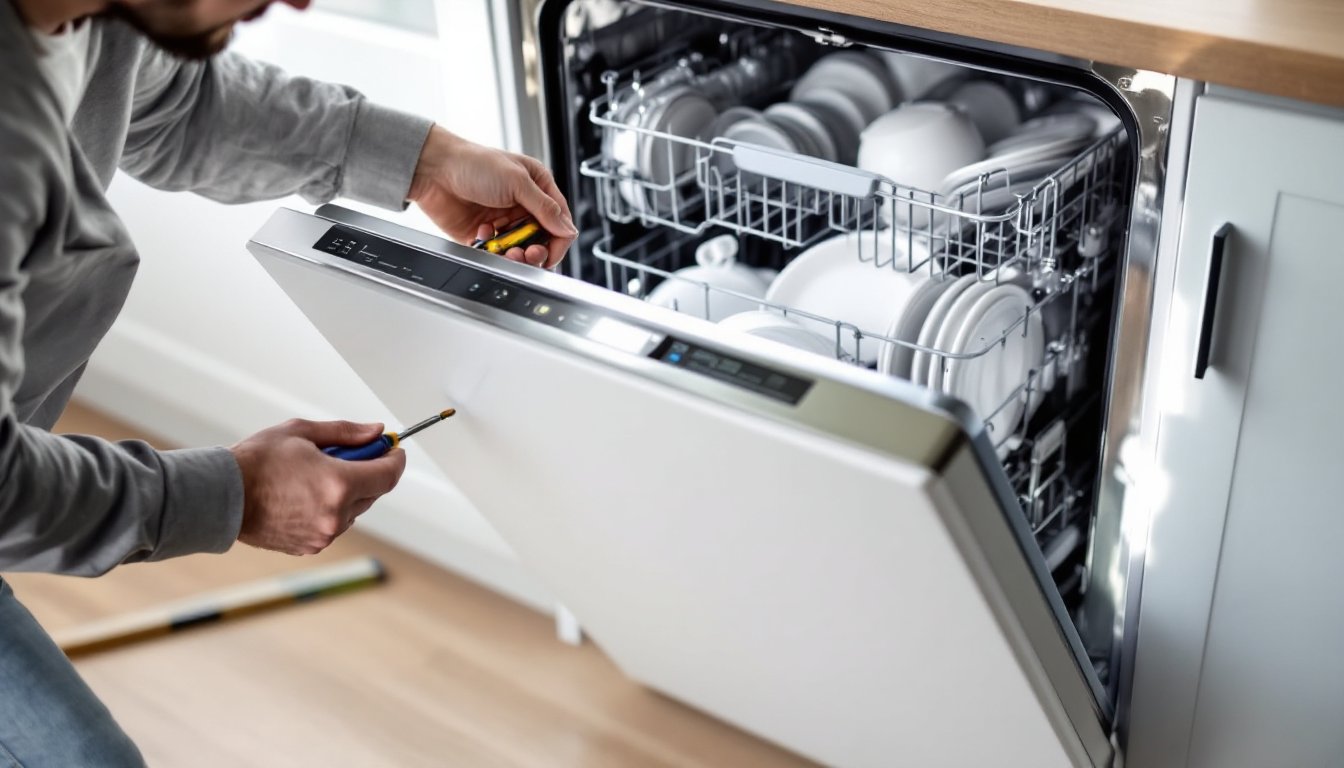
A dishwasher door that won’t close properly is more than just an annoyance, it prevents the unit from running and can lead to leaks or damage if forced. Most closure issues stem from straightforward mechanical problems that homeowners can diagnose and fix in under an hour with basic tools. Before calling a repair tech and paying a service call fee, check these seven common culprits. Many fixes require nothing more than adjusting a screw, clearing a blockage, or replacing an inexpensive part.
Table of Contents
ToggleKey Takeaways
- A dishwasher not closing is typically caused by obstructions, misalignment, worn latches, damaged gaskets, or unlevel installation—most issues can be diagnosed and fixed in under an hour with basic tools.
- Start troubleshooting by checking for physical blockages inside the dishwasher (tall handles, jammed racks, detergent buildup) before inspecting more complex hardware components.
- The door latch mechanism requires regular cleaning with vinegar to remove detergent film, and bent strikers or worn catches should be tightened or replaced using your dishwasher’s model number.
- A torn, warped, or dirty door gasket prevents a secure seal and can be restored by cleaning with baking soda paste or replaced inexpensively by pressing a new gasket into its retaining channel.
- Ensure your dishwasher is perfectly level using a 24-inch level, as an unlevel unit will cause the door to swing open or fail to latch properly.
- Broken door springs require professional replacement due to high tension risk, but most other repairs like hinge tightening or latch adjustment can be completed by homeowners without calling a service technician.
Why Your Dishwasher Door Won’t Stay Closed
Dishwasher doors rely on a simple but precise system: hinges, springs, a latch mechanism, and a door gasket working in concert. When any single component fails or shifts out of alignment, the door won’t seal or latch.
The most frequent causes fall into a few categories: physical obstructions preventing the door from swinging fully shut, worn or broken hardware (latches, springs, hinges), a warped or damaged door gasket, or an unlevel appliance that throws off the door’s swing arc. Less obvious factors include buildup of detergent residue on the gasket or latch striker, or a misaligned door panel if the unit has a custom panel overlay.
Start by ruling out the simplest issues, obstructions and leveling, before moving on to hardware inspection. Most problems don’t require replacing the entire door assembly: individual parts are available from appliance parts suppliers and manufacturer service centers.
Check for Obstructions Inside the Dishwasher
Open the door fully and inspect both racks. A tall pot handle, cutting board, or baking sheet leaning at an odd angle can block the door’s path. Pull out the bottom rack and check that the spray arm rotates freely, if it’s jammed or knocked off-center, it may protrude enough to interfere with closure.
Examine the dish rack rollers and guides. Racks that have jumped their tracks can tilt forward, causing dishes to stick out past the door frame. Slide both racks in and out to confirm they’re seated properly on their rails.
Inspect the detergent dispenser and rinse aid compartment. A broken dispenser door or a glob of hardened detergent can prevent the main door from latching. Wipe down the dispenser with a damp cloth and ensure the spring-loaded door snaps shut cleanly.
Finally, look inside the tub for any foreign objects, utensils, jar lids, or broken dish fragments, that may have fallen into the bottom sump or door edge. Even a small obstruction wedged in the gap between the door and tub can prevent a tight seal.
Inspect and Adjust the Door Latch
The door latch is a two-part system: a latch striker mounted on the door and a latch catch (or receiver) mounted in the dishwasher frame. Over time, the catch can become caked with detergent film, or the striker can bend or wear down.
Open the door and locate the latch striker on the inner door edge, it’s usually a plastic or metal tab near the top center. Check for cracks, warping, or looseness. If it wiggles, tighten the mounting screws with a Phillips-head screwdriver. If the striker is cracked, order a replacement part using your dishwasher’s model number (found on the door jamb or inner edge).
Next, inspect the latch catch inside the tub opening. Wipe it clean with a rag dampened with white vinegar to remove buildup. Test the catch mechanism by pressing it manually, it should spring back firmly. If it’s sluggish or stuck, spray a tiny amount of silicone lubricant (never WD-40 or oil, which attract grime) and work the mechanism a few times.
Some models use an electronic door latch with a micro-switch that signals the control board. If the latch clicks but the dishwasher won’t start, the switch may be faulty. Consult your owner’s manual or search for a wiring diagram online. Replacing an electronic latch typically involves disconnecting two wire harnesses and removing a couple of screws.
Examine the Door Gasket for Damage or Misalignment
The door gasket (or door seal) is a flexible rubber or vinyl strip that runs along the inside perimeter of the door. It creates a watertight seal when the door closes. A torn, warped, or misaligned gasket allows the door to close partway but not latch securely.
Run your fingers along the entire gasket, feeling for cracks, brittleness, or sections that have pulled away from the retaining channel. Look for mold, mildew, or hardened detergent residue, these can stiffen the gasket and prevent proper compression.
Clean the gasket with warm water and a soft brush. For stubborn buildup, use a paste of baking soda and water. Avoid harsh chemicals or abrasive pads that can damage the rubber. If the gasket is simply dirty but intact, cleaning may restore its flexibility and seal.
If the gasket is torn or permanently compressed (especially at the corners), it needs replacement. Most gaskets are held in place by a retaining strip or friction fit, no adhesive required. Order the correct part for your model, then pull the old gasket out of its channel and press the new one in, starting at a top corner and working your way around. Some dishwasher door issues trace directly to worn gaskets that no longer form a proper seal.
Ensure Your Dishwasher Is Level
An unlevel dishwasher can cause the door to swing open on its own or fail to latch. Dishwashers are designed to sit level front-to-back and side-to-side, with adjustable leveling legs at the front corners.
Grab a 24-inch level and place it on the floor in front of the dishwasher, then across the top edge of the open door. Check both the left-to-right and front-to-back planes. The unit should be perfectly level or have a very slight forward tilt (no more than 1/8 inch) to aid drainage, consult your installation manual for the manufacturer’s spec.
If the dishwasher is out of level, open the door and locate the front leveling legs. Most are adjusted by turning a threaded foot with a wrench or pliers. Some models have a screw-adjustment mechanism accessible from the front toe kick panel. Turn the legs clockwise to raise, counterclockwise to lower.
Recheck level after each adjustment. Once level, the door should close smoothly under its own weight without slamming or bouncing open. If the unit is built-in and secured to countertop or cabinetry, you may need to loosen the mounting brackets before adjusting the legs, then re-secure them.
Unlevel installations are especially common after a kitchen remodel or if the floor has settled. Don’t skip this step, many common dishwasher problems are solved by proper leveling.
Replace Worn or Broken Door Springs and Hinges
Dishwasher doors use tension springs and hinges to control the door’s swing and counterbalance its weight. When springs break or stretch, the door drops too fast or won’t stay in the open position, making it hard to close and latch properly. Worn hinges can cause the door to sag or sit crooked.
Safety first: Dishwasher door springs are under significant tension and can snap violently if released improperly. Wear safety goggles and work gloves. If you’re uncomfortable working with spring tension, call an appliance tech.
To inspect the springs, open the door and look at the hinge assemblies on either side of the tub opening (usually behind side access panels or visible at the bottom corners). The springs are typically heavy-gauge coils or cables running from the door hinge to an anchor point on the frame.
If a spring is broken (you’ll see a loose or disconnected cable or coil), or if the door feels unusually heavy or drops like a rock when opened, replacement is required. Order a spring kit for your model, springs almost always come in matched pairs and should be replaced together to maintain even tension.
Replacing door springs varies by brand. Some units require removing the lower access panel and unhooking the spring with a needlenose pliers: others need the door removed entirely. Consult a service manual or video tutorial specific to your brand (Bosch, Whirlpool, GE, KitchenAid, etc.) for step-by-step guidance.
Hinges rarely fail outright but can develop play or rust. If the door wobbles side-to-side or the hinge pin is corroded, lubricate with silicone spray or replace the hinge assembly. Loose hinge screws should be tightened: stripped screw holes may need a wood filler or larger screw.
After spring or hinge replacement, test the door’s swing. It should open smoothly to about 45 degrees, then slow as you pull it further. When released from the open position, it should stay put or close gently on its own, not slam. For hands-on guidance on appliance repairs and home workshop projects, refer to trusted DIY resources.
Conclusion
Most dishwasher door problems are fixable with a screwdriver, a level, and a little patience. Start with the simplest checks, obstructions and leveling, then move on to the latch, gasket, and springs. Replacement parts are widely available and usually cost less than a single service call. If you’ve worked through these steps and the door still won’t close, or if you notice water leaks, unusual noises, or error codes, it may be time to consult a licensed appliance technician.