
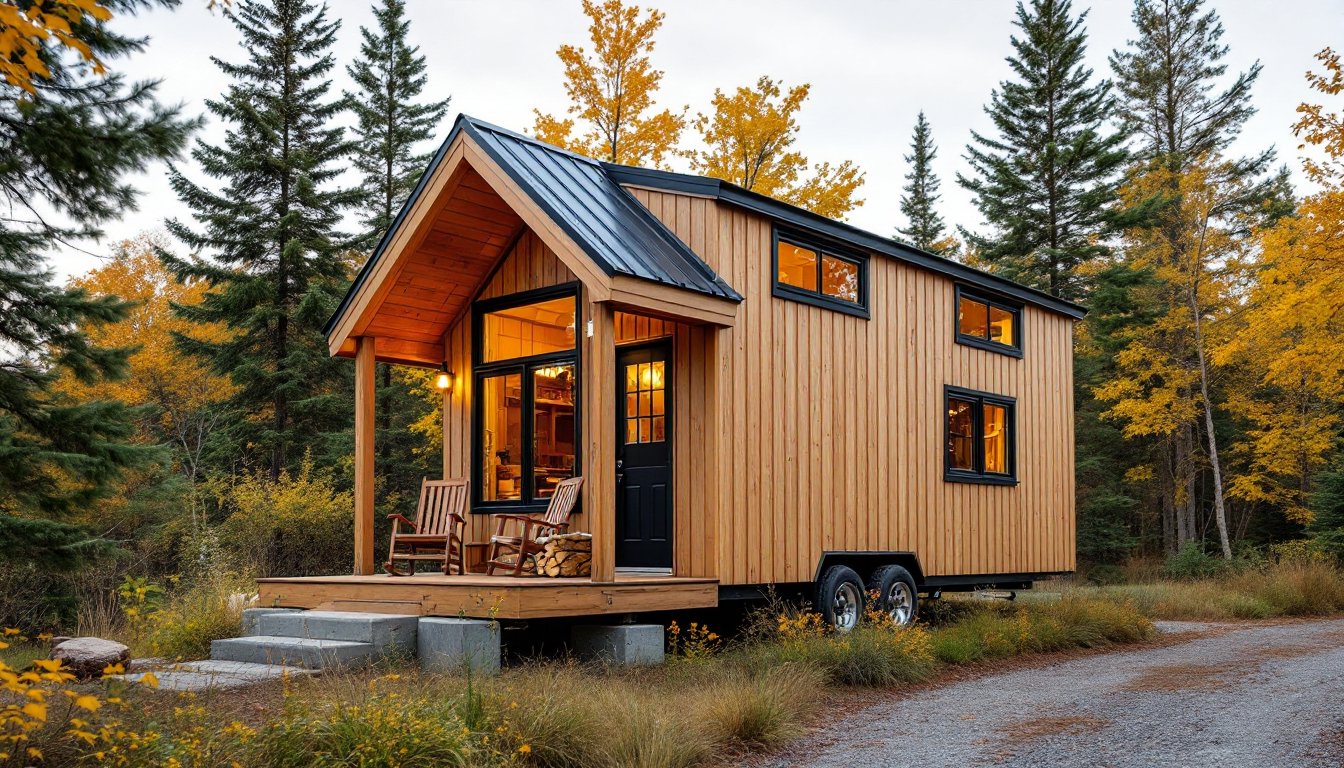
The cabin tiny home sits at the intersection of mountain retreat aesthetics and minimalist efficiency. It’s not just downsizing, it’s trading square footage for intentionality, wrapping yourself in wood grain and warm lighting while shedding the maintenance burden of a conventional house. Whether you’re looking at a full-time residence, a weekend escape, or rental income property, cabin tiny homes offer a specific design language that balances cozy nostalgia with modern spatial strategy. This guide walks through what defines them, what they cost, and how to make one work on your land.
Table of Contents
ToggleKey Takeaways
- A cabin tiny home combines the footprint of a tiny house (under 400 sq ft) with rustic cabin aesthetics like board-and-batten siding, metal roofs, and exposed beams, offering a deliberate balance between cozy nostalgia and spatial efficiency.
- Cabin tiny homes deliver significant cost savings—heating a well-insulated 300 sq ft cabin may run $30–$60 monthly compared to $200+ for conventional houses, with lower property taxes, utilities, and maintenance burden.
- Building a DIY cabin tiny home costs $20,000–$45,000 in materials, while turnkey purchases range $50,000–$95,000, with kit options at $15,000–$35,000 plus assembly and soft costs for permits and utilities.
- Zoning compliance is critical; many municipalities require 600–1,000 sq ft minimums, making rural land and ADU ordinances the most viable placement options for cabin tiny homes.
- Standing seam metal roofing, loft sleeping areas, wet bath layouts, and vertical storage (built-in drawers, wall shelving, pegboard) define the functional design language of cabin tiny homes.
- Material use in a cabin tiny home drops 80–90% compared to median U.S. homes, making them a sustainable choice with reduced embodied carbon and construction waste.
What Is a Cabin Tiny Home?
A cabin tiny home blends the footprint of a tiny house, typically under 400 square feet, with cabin-style construction and finishes. Think board-and-batten siding, pitched metal roofs, exposed beams, and natural wood interiors instead of the sleek minimalism often seen in modern tiny homes.
Unlike conventional cabins, which can sprawl across thousands of square feet, cabin tiny homes prioritize vertical space and multifunctional layouts. Most are built on permanent foundations, though some manufacturers offer trailer-mounted versions that fall under RVIA or NOAH standards for transportability.
From a code perspective, these structures often occupy a gray area. If built on a foundation and exceeding 200 square feet, they usually require compliance with the International Residential Code (IRC) appendix for tiny houses (Appendix Q), which sets minimums for ceiling height (6’8″ in living areas, 6’4″ in bathrooms and kitchens), egress windows, and loft ladder specifications. If you’re going the wheeled route, you’ll sidestep some building codes but face towing and parking regulations instead.
Most cabin tiny homes feature a loft sleeping area accessed by ladder or ship’s stairs, a ground-floor living zone, and a compact wet bath or composting toilet setup. The aesthetic pulls heavily from Scandinavian and Appalachian design traditions, simple forms, honest materials, and an emphasis on natural light.
Benefits of Choosing a Cabin Tiny Home
Lower carrying costs top the list. Property taxes, utilities, and insurance drop significantly when your heated square footage sits below 400. Heating a well-insulated 300-square-foot cabin in a cold climate might cost $30–$60 per month with a propane wall heater or mini-split heat pump, compared to $200+ for a conventional house.
Reduced maintenance burden follows close behind. A metal roof lasts 40–70 years with minimal upkeep. Fewer windows mean less caulking and fewer failure points. One person can stain the exterior in a long weekend instead of hiring a crew.
Cabin tiny homes also force intentional ownership. Without room for clutter, possessions get edited down to what’s functional or meaningful. Storage becomes designed-in rather than an afterthought, think built-in benches with lift tops, under-stair drawers, and overhead racks.
From a sustainability angle, material use drops by 80–90% compared to the median U.S. home. A typical cabin tiny home uses 15–25 sheets of plywood, around 1,500–2,500 board feet of dimensional lumber, and significantly less drywall, insulation, and roofing material. Embodied carbon and construction waste shrink accordingly.
Finally, many owners cite location flexibility. A cabin tiny home on a trailer can be relocated if you change jobs or want a new view. On a foundation, it can serve as a primary dwelling on rural land where minimum square footage requirements don’t apply, or as an accessory dwelling unit (ADU) in jurisdictions that permit them. Many small space living strategies translate well to cabin tiny homes, especially around furniture selection and visual flow.
Design Features That Define Cabin Tiny Homes
Exterior Materials and Aesthetics
Vertical board-and-batten siding is the go-to cladding. It sheds water well, evokes traditional cabin construction, and uses 1×8 or 1×10 boards with 1×2 or 1×3 battens to cover seams. Western red cedar, white pine, and cypress are common species: expect to pay $2.50–$5.50 per linear foot depending on grade and region. Pre-primed fiber cement board-and-batten is a lower-maintenance alternative at a similar price point.
Roofing almost always means standing seam metal in charcoal, forest green, or burnished bronze. It handles snow load better than asphalt shingles, doesn’t require periodic replacement, and complements the rustic profile. Typical cost is $8–$12 per square foot installed, but DIYers with a metal brake and seaming tool can cut that nearly in half.
Many designs feature a covered porch or shed-roof overhang to extend usable outdoor space and protect the entry from rain. These overhangs are often supported by 6×6 posts on concrete piers, with 2×8 or 2×10 rafters at 24″ on center. The porch doesn’t count toward interior square footage but adds significant livability.
Windows tend toward casement or awning styles rather than sliders, both for weather-tightness and aesthetics. Black or bronze frames have replaced white vinyl in most contemporary cabin builds. Publications like Dwell frequently showcase how fenestration and material palette drive cabin tiny home character.
Interior Layout and Space Optimization
Loft bedrooms are standard, typically accessed by a ladder (14″–16″ rung spacing) or alternating-tread stairs (which meet IRC Appendix Q if designed properly). Loft floor area usually runs 50–80 square feet, just enough for a queen mattress and minimal clearance. Ceiling height at the loft’s peak is often 3’6″–4′, so sitting upright works, but standing doesn’t.
Ground-floor kitchens favor apartment-size appliances: 24″ ranges, 10–12 cubic foot refrigerators, and 18″ dishwashers if space allows. Countertops run 24–30 linear feet in an efficient L or galley layout. Butcher block, concrete, and quartz are common surfaces: avoid tile, grout lines collect grime in tight quarters.
Bathrooms are wet baths (shower pan encompasses the entire room) or traditional 3-piece layouts in the 25–35 square foot range. Composting toilets (Nature’s Head, Sun-Mar) eliminate the need for septic or sewer hookups, though they require periodic emptying and a small 12V fan for ventilation. Standard flush toilets need a 3″ drain line sloped at 1/4″ per foot minimum.
Storage is vertical: open shelving, wall-mounted cabinets, pegboard tool walls, and hooks. Stairs often conceal pull-out drawers or cabinets underneath. Fold-down tables and Murphy beds appear in some designs, though many owners find the mechanical complexity isn’t worth the trouble.
Insulation values matter more in small spaces. Walls are typically framed with 2×4 studs at 16″ or 24″ on center, filled with R-13 to R-15 batt or spray foam. Roof assemblies should hit R-30 or better to prevent ice dams and summer heat gain. Many country-style projects emphasize similar insulation upgrades for seasonal cabins.
Cost Breakdown: Building vs. Buying a Cabin Tiny Home
DIY builds typically run $20,000–$45,000 for materials, assuming you supply labor and have access to basic framing tools. That includes framing lumber, sheathing, siding, roofing, windows, doors, insulation, interior finishes, and basic electrical/plumbing rough-in. High-end appliances, custom cabinetry, or exotic wood finishes will push the upper limit higher.
Key cost drivers:
- Trailer (if wheeled): $4,500–$7,500 for a heavy-duty tiny house trailer rated for 10,000–14,000 lbs
- Windows and doors: $2,000–$5,000 depending on quantity and quality
- Roofing: $1,200–$2,800 for standing seam metal on a 300 sq ft roof
- Electrical and plumbing: $2,500–$5,000 if you hire licensed tradespeople for rough-in and finish (often required for permit approval)
- Foundation (if permanent): $3,000–$8,000 for a pier-and-beam or slab-on-grade foundation
Turnkey purchases from builders range $50,000–$95,000 depending on size, finishes, and whether it’s delivered finished or as a shell. Popular builders include Tumbleweed, Escape, and regional custom shops. Delivery fees add $2–$5 per mile for anything over 100 miles.
Kit homes split the difference. Companies like Jamaica Cottage Shop and Summerwood offer pre-cut cabin kits for $15,000–$35,000. You handle assembly, foundation, utilities, and interior finish. Plan on another 200–400 hours of labor if you’re reasonably handy.
Don’t overlook soft costs: permits ($500–$2,000), utility hookups ($3,000–$10,000 depending on distance to existing lines), site prep and grading ($1,500–$5,000), and septic or composting toilet systems ($1,200–$8,000). If you’re financing, expect higher interest rates, many lenders classify tiny homes as RVs or personal property rather than real estate.
Where to Place Your Cabin Tiny Home
Zoning is the first filter. Many municipalities have minimum square footage requirements (often 600–1,000 sq ft) that disqualify tiny homes as primary residences. Rural counties and unincorporated areas tend to be more flexible, especially if your cabin is on a permanent foundation and meets IRC Appendix Q.
ADU ordinances offer a workaround in some cities. If the jurisdiction allows accessory dwelling units, a cabin tiny home can sit in your backyard as a guest house, rental, or aging-in-place suite for family. Check setback requirements (typically 5–10 feet from rear and side property lines) and owner-occupancy rules (some cities require the owner to live on-site).
RV parks and tiny home communities accept wheeled cabin tiny homes, though monthly lot fees run $400–$900 depending on location and amenities. These communities handle utilities and often provide shared facilities, but you’re renting the land, not owning it.
Raw land is the most common scenario. Look for parcels with road access, electricity within 500 feet, and a buildable soil report if you’re installing septic. Slope matters, anything over 10% grade complicates foundation work and driveway cuts. Budget $1,000–$3,000 for a well if municipal water isn’t available, or plan for rainwater catchment (legal in most states, but confirm local rules).
Permitting varies wildly. Some jurisdictions treat a 300-square-foot cabin on a foundation as a standard residential build requiring full plan review, inspections, and utility hookups. Others classify it as a non-habitable outbuilding (shed) if it lacks plumbing, which sidesteps most code enforcement but limits how you can legally use it. Always call the local building department before breaking ground, assumptions here cost time and money.