
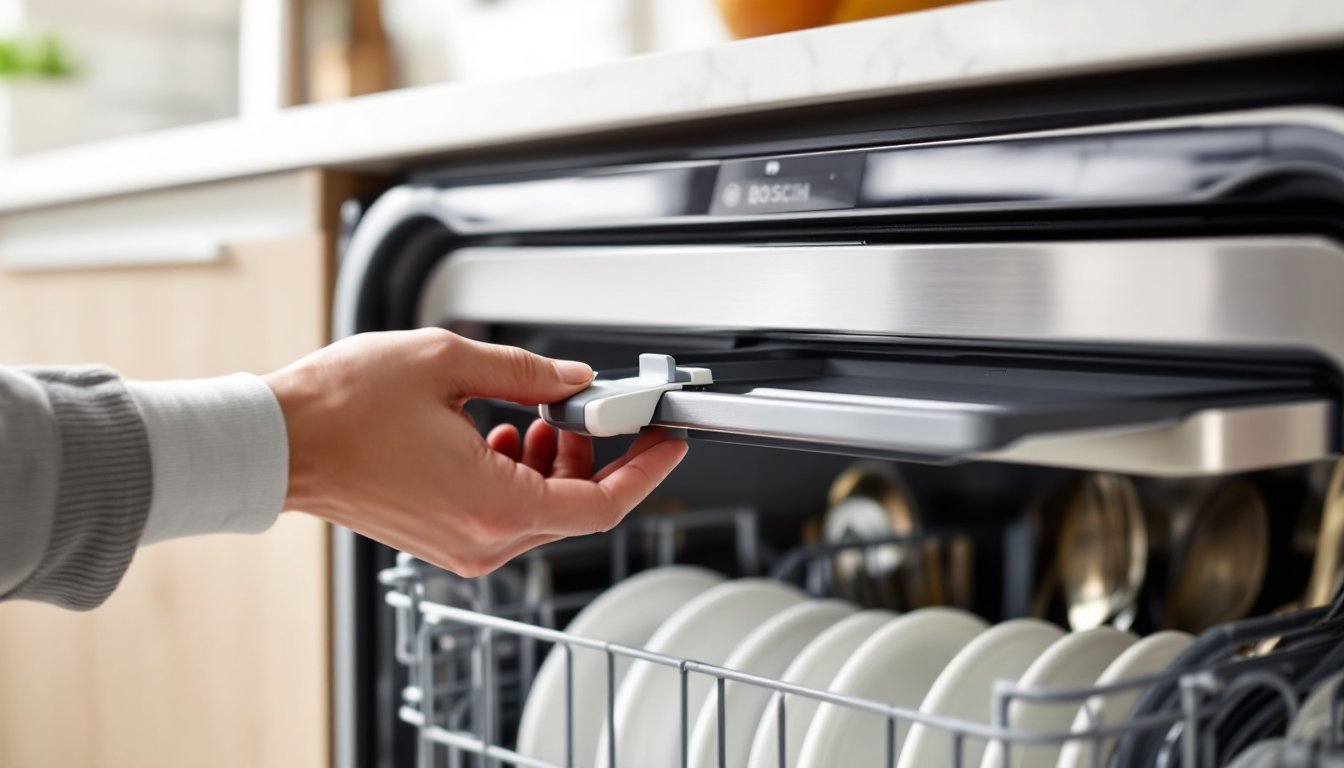
A Bosch dishwasher door that won’t close properly doesn’t just prevent the unit from running, it can mean standing water, dishes left dirty, and a serious disruption to the household routine. Bosch appliances are known for their precision engineering, but door closure issues are surprisingly common and often straightforward to fix. Before scheduling a service call and paying diagnostic fees, homeowners can troubleshoot several mechanical and alignment problems themselves. This guide walks through the most frequent causes of door latch failures and provides step-by-step solutions to restore normal operation.
Table of Contents
ToggleKey Takeaways
- Bosch dishwasher door closure problems are typically caused by obstructions, worn latches, fatigued springs, or damaged gaskets—all fixable with basic tools and troubleshooting.
- Always start diagnosis by checking for misaligned dishes, debris in the hinge channels, and ensuring the unit is level (tilted back 1–2 degrees) before attempting repairs.
- A Bosch dishwasher door latch should snap crisply when pressed; if it sticks, feels mushy, or won’t retract fully, the latch assembly requires replacement.
- Hinge springs under tension can snap if mishandled, so wear safety glasses during replacement and consider having a second person assist if you lack appliance repair experience.
- Clean the door gasket with a 50/50 vinegar solution to remove buildup, and test the seal by closing the door on a dollar bill—if it pulls out easily, the gasket needs replacement.
- Call a professional technician for electrical issues, control board faults, or structural damage like tub cracks or warped panels, as these repairs require specialized tools and expertise.
Common Reasons Your Bosch Dishwasher Door Won’t Close Properly
Bosch dishwasher doors rely on a series of mechanical components working in sync: spring-loaded hinges, a latch assembly, a rubber gasket, and a strike plate mounted to the tub. When any part fails or shifts out of alignment, the door won’t engage.
Physical obstructions are the leading culprit. A tall pot handle, a baking sheet loaded at an angle, or even a utensil wedged in the lower rack can prevent the door from traveling its full arc. Unlike older dishwasher models with more forgiving tolerances, Bosch units have tight clearances designed for quiet operation and energy efficiency.
Worn or broken latch mechanisms rank second. The latch, a spring-loaded plastic or metal hook that engages the strike plate, takes repetitive stress with every cycle. Over time, plastic components can crack, springs can lose tension, or the strike plate can loosen from its mounting screws.
Hinge and spring fatigue also compromise door function. Bosch dishwashers use torsion springs or coil springs mounted along the bottom hinge assembly to counterbalance the door’s weight. If a spring breaks or slips off its anchor, the door either slams shut too forcefully or won’t stay closed under its own weight.
Gasket issues contribute to closure problems when the rubber seal swells, hardens, or gets pinched. A deformed gasket creates uneven resistance around the door perimeter, preventing the latch from seating fully. Gaskets can also attract food debris and grease, which stiffens the material and throws off alignment.
Check for Obstructions and Misaligned Dishes
Start every door closure diagnosis by opening the dishwasher fully and pulling out both racks. Inspect the interior for anything protruding beyond the rack boundaries. A common issue: tall items in the lower rack that catch the top spray arm or upper rack guides. Platters, cutting boards, and mixing bowls should sit flat and within the rack’s footprint.
Remove both racks and look at the door cavity itself. Check the detergent dispenser door, if it’s stuck open or damaged, it can block the main door from latching. Rinse aid dispenser caps occasionally loosen and create interference as well.
Run your hand along the bottom edge of the door opening, feeling for debris lodged in the hinge channel. Small utensils, twist ties, and jar labels can wedge into the hinge slot and prevent full closure. Use a flashlight to inspect the strike plate area on the top edge of the tub, food buildup here can keep the latch from engaging.
Close the door slowly and watch the path it travels. If the door contacts the kick plate, cabinet face, or flooring before latching, the dishwasher itself may have shifted. Check that the unit is level using a torpedo level on the front door sill. Bosch recommends adjusting the front leveling legs so the unit tips slightly backward (about 1–2 degrees), which helps the door stay closed during operation. Turn the legs clockwise to raise, counterclockwise to lower.
Inspect and Replace Damaged Door Latches
The latch assembly sits on the door panel’s top inner edge, behind a plastic cover or integrated into the control panel housing. To access it, you’ll need to remove the door’s inner panel.
Safety first: Disconnect power at the breaker before disassembly. Bosch dishwashers have capacitors that can hold a charge, so waiting five minutes after disconnecting power is wise.
Open the door and locate the screws securing the inner panel, typically Torx T15 or T20 screws along the top and side edges. Some models use Phillips-head screws. Remove all fasteners and carefully lift the inner panel up and away, keeping wire harnesses connected unless you’re replacing the entire control board.
With the panel removed, the latch mechanism is visible. It’s usually a white or gray plastic housing with a metal or reinforced plastic hook. Press the latch manually, it should snap crisply and return to the resting position. If it sticks, feels mushy, or doesn’t retract fully, replacement is needed.
Bosch part numbers vary by model series (SHP, SHE, SHX, etc.), so verify the exact replacement part using the model number stamped inside the door edge. Many appliance repair guides walk through component identification for different brands.
Installation: Disconnect the wire harness clip from the old latch, remove the mounting screws (usually two), and reverse the process with the new part. Align the latch so it engages the strike plate squarely when the door closes. Before reassembling the inner panel, test the latch function by closing the door gently and listening for a firm click.
Examine Door Hinges and Springs for Wear
Bosch dishwasher hinges are mounted along the bottom edge of the tub, hidden beneath the kick plate. Hinge springs counterbalance the door’s weight, making it easy to open and preventing it from slamming.
To access the hinges: Remove the lower kick plate (usually held by clips or screws at the bottom corners) and look for the spring assemblies on both sides. Torsion-style springs wrap around a metal rod, while coil springs hook onto brackets.
Check both springs for visible damage, breaks, separation from anchor points, or significant corrosion. A broken spring will cause the door to drop heavily when opened or fail to hold the closed position. If one spring is damaged, replace both to maintain balanced tension.
Inspect the hinge brackets themselves. Look for cracks in the plastic housing or bent metal tabs. Over time, repeated stress can cause the bracket to separate from the tub mounting points, especially if the dishwasher has been overloaded or the door was used as a step stool (a surprisingly common mistake).
Replacement springs are model-specific. Bosch uses different tension ratings depending on door weight and dimensions. When installing new springs, wear safety glasses, these components are under tension and can snap if mishandled. Hook the spring onto the lower bracket first, then stretch it to the upper anchor point using needlenose pliers or a spring installation tool.
After spring replacement, test the door balance. Open it halfway and release, it should hold position or drift slowly closed. If it slams or springs open, spring tension needs adjustment or re-seating. Some models allow minor tension tweaking by repositioning the spring on multi-notch anchor brackets.
Adjust or Replace the Door Gasket Seal
The door gasket, a continuous rubber or silicone seal running around the tub opening, creates the watertight barrier during wash cycles. If it’s compressed unevenly, torn, or coated in mineral deposits, it can prevent the door from seating flush and the latch from engaging.
Open the door and inspect the gasket’s entire perimeter. Look for tears, gaps, or areas where the seal has pulled away from the retaining channel. Run a damp cloth along the gasket to remove soap scum, grease, and hard water buildup. For stubborn mineral deposits, a 50/50 solution of white vinegar and water works well.
Check the gasket’s fit in the retaining groove. Over time, heat and detergent exposure can cause the rubber to swell or shrink. If the gasket bunches up at the corners or sags along the bottom edge, it may need repositioning. Gently pull the gasket from the channel and press it back in, starting at the top center and working outward to each corner. Ensure it seats evenly without twists or folds.
If the gasket is cracked, hardened, or permanently deformed, replacement is the only fix. Bosch gaskets are held in place by friction or a retaining strip, not adhesive. To remove: start at one corner, grasp the gasket firmly, and pull it from the channel while supporting the tub edge. The new gasket installs the same way, work in sections, pressing it firmly into the groove.
Many kitchen appliance maintenance resources suggest testing gasket integrity by closing the door on a dollar bill at several points around the perimeter. If the bill pulls out easily, the seal isn’t compressing adequately.
When to Call a Professional vs. DIY Fixes
Obstruction removal, gasket cleaning, and latch replacement are solid DIY projects for anyone comfortable with a screwdriver and basic disassembly. These repairs require minimal tools, typically a Torx driver set, needlenose pliers, and a flashlight, and parts cost between $15 and $60 depending on the component.
Hinge and spring replacement fall into the intermediate skill range. The work itself isn’t complex, but springs under tension pose injury risk if handled improperly. If you’ve never worked with appliance springs, consider having a second person assist or watch a model-specific video tutorial before attempting the repair.
Call a professional when the issue involves the control board, wiring harness faults, or structural tub damage. If the latch mechanism is intact but the dishwasher doesn’t recognize the door as closed (no lights, no response when buttons are pressed), the door switch or control board likely failed. Diagnosing electrical faults requires a multimeter and familiarity with Bosch wiring schematics.
Structural problems, cracks in the tub, a warped door panel, or a bent frame, are also best left to licensed appliance techs. These repairs may involve welding, specialized adhesives, or part fabrication, and improper fixes can lead to leaks or voided warranties.
Bosch offers a network of authorized service providers, and many home repair resources maintain databases of vetted appliance techs by region. If the dishwasher is still under warranty, using an authorized repairer ensures coverage remains valid. Extended warranties and home protection plans often cover parts and labor for mechanical failures, though wear items like gaskets may be excluded.
Conclusion
A Bosch dishwasher door that won’t close is usually the result of a simple mechanical issue, obstructions, a worn latch, fatigued springs, or a compromised gasket. Most homeowners can diagnose and fix these problems with basic tools and a methodical approach. Start with the easiest checks (dish placement, debris removal) and work toward component replacement only when necessary. When electrical or structural issues arise, professional service is the safer and more cost-effective route.